BALANCES WITHOUT BACKING.
On January 14, 2019, Canadian crypto exchange QuadrigaCX announced that co-founder and CEO Gerald Cotten had died the previous month. The platform shut down, obtained creditor protection on February 5 and moved into bankruptcy in April. For clients who had trusted those account balances, the urgent question became how much money remained.
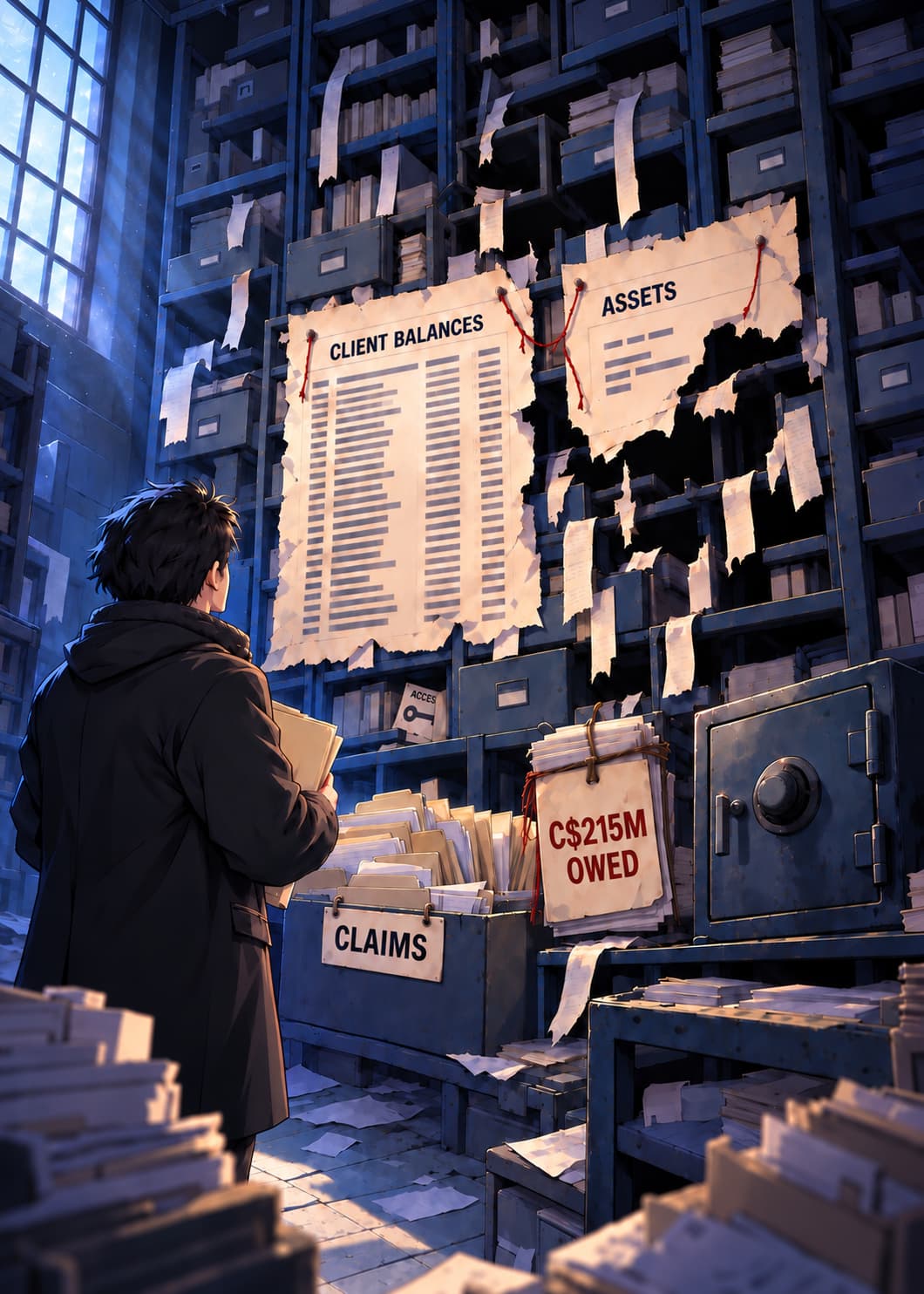
OSC staff's later reconstruction put the amount owed to over 76,000 clients at approximately C$215 million. Ernst & Young recovered or identified about C$46 million in assets, leaving a C$169 million shortfall. These are retrospective report figures, not a claim that all recoveries were complete during January-April 2019.
Staff attributed most of the shortfall to Cotten's fraudulent conduct. Their analysis traced roughly C$115 million to his trading on Quadriga using invented balances, and another C$28 million to losses on outside platforms. Real client assets covered the losses, while incoming deposits were used to meet other clients' withdrawals.
The familiar story of a dead founder and inaccessible keys explained too little. In staff's assessment, the business was already deeply insolvent before Cotten died. The missing assets could not largely be explained by losing access to wallets after his death. These are OSC staff findings and views, not findings tested before a tribunal or court.
The artwork turns that gap into a fictional archive: a huge sheet of client balances faces a small, damaged asset sheet. Claims gather below, and a safe sits to one side. The central problem is the distance between the obligations on the books and the assets available to honour them.
Sources & the artist’s interpretation
Sources: OSC staff review: executive summary ; OSC: Where did the funds go? ; EY trustee factum: chronology, paragraph 3 . The archive, person, papers, printed key note and safe are fictional symbolic imagery, not a documented location, person or evidence scene. Torn papers do not imply actual destruction of records. "BALANCES WITHOUT BACKING." is original editorial wording, not a historical quotation. The OSC account records staff views, not adjudicated findings.