THE BITCOIN SAFE.
The original Trezor hardware wallet launched on 29 July 2014 with an approach designed to isolate private keys.
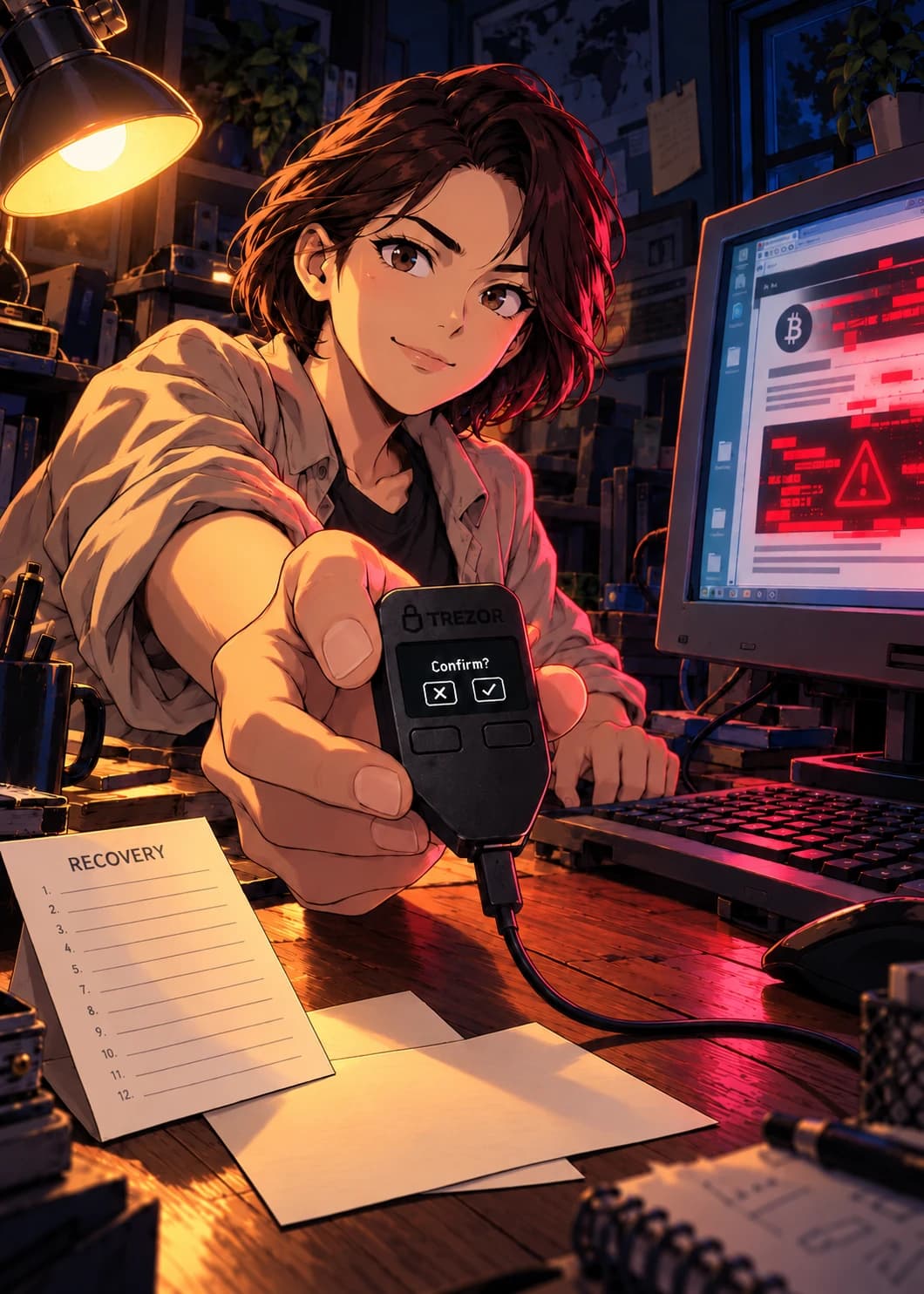
A wallet owner holds a small black device towards us. Behind it, a computer screen flashes red warnings. The room is dim, but a desk lamp keeps the face, hands and wallet in warm light. The scene makes a technical distinction visible: the machine connected to the internet does not have to be the place that holds the keys used to authorize a bitcoin transaction.
On 29 July 2014, the original Trezor, now known as the Model One, officially launched. Its founders, Marek "Slush" Palatinus and Pavol "Stick" Rusnak, had developed a single-purpose computer designed to isolate private keys from the everyday host machine. A small physical object gave self-custody a different form: something its owner could connect, inspect and operate separately from the computer's software.
The device's own screen and two buttons matter to that separation. They allow the owner to check transaction details and confirm an action on the hardware. The drawing condenses this into a simple "Confirm?" prompt. It represents the function rather than reproducing an exact launch-day interface. Bitcoin itself remains recorded on the blockchain; the device protects the signing keys used to authorize spending. The warning-filled monitor is an imagined threat, not a record of a particular hack.
The recovery sheet brings the responsibility back to the owner. Keeping keys apart from a computer is one part of custody; preserving a usable backup is another. Its empty lines suggest that preparation without displaying secret words. THE BITCOIN SAFE was early Trezor product wording, visible on pre-2016 packaging. Here it names the device's purpose without making a promise of invulnerability. The pocket-sized wallet offers a separate point of control, while care and judgment still belong to the person holding it.
Sources & the artist’s interpretation
Trezor's ten-year history dates the launch and describes its founders' approach. Its Model One authentication guide shows the old THE BITCOIN SAFE packaging; its hardware security guide explains the screen and buttons. Current guides establish functions, not every detail of 2014 firmware or packaging.