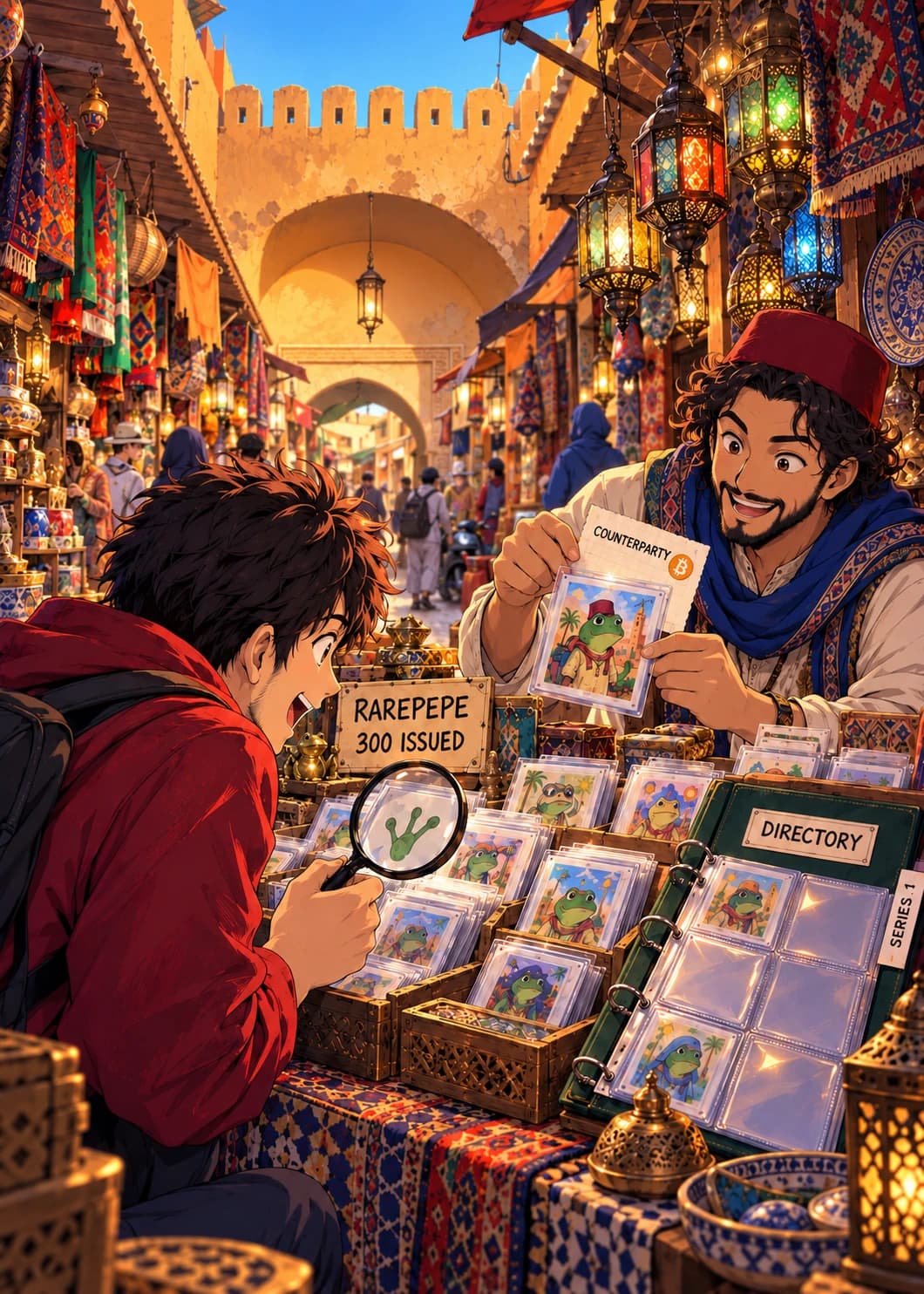
THE MOST RARE PEPE
In September 2016, Rare Pepes brought internet meme culture into a market for blockchain-based art. Artists made their own versions of the familiar frog, while collectors could hold and trade the associated digital tokens. Counterparty recorded those assets through transactions on Bitcoin.
The first RAREPEPE issuance created 300 indivisible units on 9 September 2016, at 01:46:42 UTC in Bitcoin block 428,919. This is the event behind the card's date. The community's Book of Kek archive dates the first artwork's addition to the Rare Pepe Directory to 13 September, and identifies RAREPEPE as Series 1, Card 1.
The directory gave the expanding collection a catalogue: named assets, numbered cards and series. Each asset had its own issuance quantity. The 300 on this card belongs to the original RAREPEPE issue, rather than the entire Rare Pepe collection or its present circulating supply.
A picture could still be copied. Holding its token meant holding a recorded balance that could be transferred through Counterparty. The image and its token record did different jobs: one carried the joke and artwork; the other made a collectable edition traceable. Rare Pepes became an important early chapter in community-made cryptoart.
This scene turns that digital collecting culture into a fictional Moroccan souk. The merchant, collector, cards and market exchange are imagined. They make collecting tangible without claiming that Rare Pepes began in Morocco or that these are replicas of the original Nakamoto card.
Sources & the artist’s interpretation
Sources: original issuance record ; Counterparty asset documentation ; Book of Kek's project history and Series 1 archive . The phrase is an exact excerpt of the issuance description. The 13 September directory date is community-archive evidence; the original directory page could not be checked. Architecture was inspired by two user-supplied photographs with no supplied credit metadata. The souk is fictional staging. No cross-card cameo is identified.